
Breakthrough Minimally Invasive Treatment
Microwave Ablation: Harnessing the Power of Precision
At
What is Microwave Ablation ?
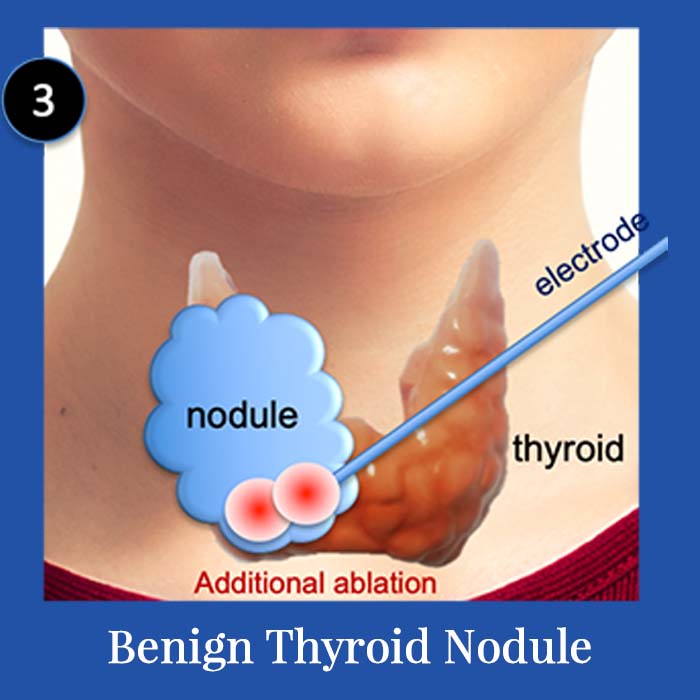
Microwave ablation is a cutting-edge, minimally invasive procedure that utilizes precise microwave energy for the ablation of benign thyroid nodules. By inserting a small probe into the tumor and emitting controlled microwave energy, this technique rapidly heats and eradicates the tumor while minimizing harm to surrounding healthy tissue.
Compared to traditional surgery, microwave ablation offers numerous benefits such as smaller incisions, reduced pain, faster recovery, and fewer complications. It is effective for various tumor types and particularly advantageous for inoperable tumors or situations where surgery is risky. This personalized treatment option empowers patients with improved quality of life and long-term tumor control, representing a significant advancement in tumor treatment.



Benefits of MWA over traditional surgery?

Minimally Invasive: Microwave ablation is a minimally invasive procedure that involves small incisions, while traditional surgery often requires larger incisions. This results in less trauma to the body, reduced blood loss, and faster recovery times.
Preservation of Healthy Tissue: Microwave ablation specifically targets and destroys tumor cells while preserving surrounding healthy tissue. In contrast, traditional surgery may require the removal of a larger portion of healthy tissue to ensure complete tumor removal.
Quicker Recovery: Due to its minimally invasive nature, microwave ablation offers a quicker recovery time compared to traditional surgery. Patients typically experience less pain and discomfort, require shorter hospital stays, and can return to their normal activities sooner.
Reduced Risk of Complications: Microwave ablation carries a lower risk of complications compared to traditional surgery. The smaller incisions and reduced tissue manipulation minimize the chances of infection, bleeding, and other surgical complications.
Suitable for patients with high risks: like very old patients, pregnant women’s, patient with pacemakers.
Repeatable Treatment: Microwave ablation can be repeated if needed, allowing for ongoing tumor control and management. This flexibility is particularly beneficial for patients with multiple nodules.
Local Anesthesia: Microwave ablation can often be performed under local anesthesia, reducing the risks associated with general anesthesia that are typically required for traditional surgery. This makes it a safer option, especially for patients with underlying health concerns.
Cost-Effective: Shorter hospital stays
Improved Quality of Life: By targeting tumors with precision, microwave ablation can help improve quality of life for patients. It can alleviate symptoms associated with tumors, minimize postoperative pain, and enable a quicker return to daily activities.
Collaborative Treatment Approach: Microwave ablation is often part of a multidisciplinary treatment approach, involving a team of healthcare professionals. This collaborative approach ensures that patients receive comprehensive care, tailored to their specific needs.
What we offer ?
Expertise and Experience
Personalized Approach
Minimally Invasive
Quick Recovery
Cutting-Edge Technology
Meet our Expert
Dr. Amrapali pawar
M.S.(ENT), F.C.P.S., D.O.R.L.,(Mumbai)
- Dr.Amrapali Pawar has been trained for MWA of thyroid under the renowned DR.BULENT CELIK from TURKEY.
- She is a renowned ENT specialist practicing in Mumbai for the past 25+ years.
- Currently Heads the Department of ENT and Head Neck surgery as a senior consultant at K.B.Bhabha Municipal hospital, Bandra.
- Consults at the very well known hospital in the western suburbs – Criticare hospital and research center at Andheri west and the VLSR clinic at Bandra west.
- Visiting ENT surgeon at the prominent Sushrut hospital and Research center at Chembur.
- Post-graduation in ENT from Grant Medical College and Sir JJ Group of Hospitals, Mumbai.
- Thyroid cancer Preceptorship at the prestigious Tata Memorial Hospital, Mumbai.

