
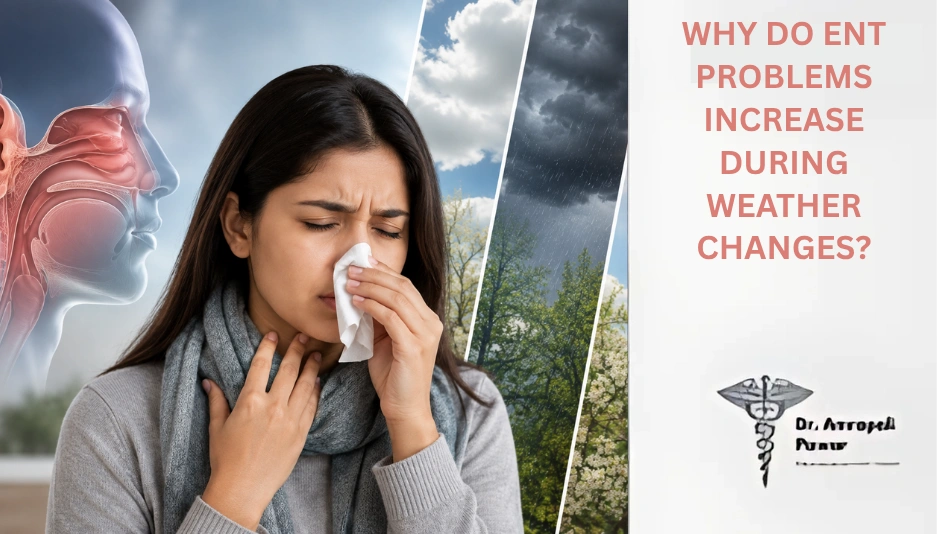
Changes in weather may affect your daily activities, but stress you may be unaware of may impact your ENT health. Moisture or lack thereof in the air may cause sinus problems or problems with your ear. Allergies may cause ear problems and increase sniffles. Seasonal changes often worsen symptoms and may cause you to feel sick all the time. One study suggests seasonal changes may worsen symptoms of the sinuses and nasal passages.
How Weather Changes Affect Health
The sinuses, ears and nose are all connected. If your nose gets irritated or inflamed, your sinuses and ears may start to get irritated as well. Even a cold or allergies may lead you to experience pressure and blockage in your ears, sinuses, and throat.
- Changes in Temperatures
Huge jumps in temperature irritate the nasal passages. When air is cold and dry, it can cause the mucus in the nose to get thick and dry. This may lead to sinus irritation and blockage.
- Humidity
The moisture in the air can help mould grow and increase irritants in the air. Dry air can lead to congestion.
One of the problems associated with monsoon weather is moisture in the air. This can cause ear infections and sinusitis and increase throat problems. Prathamesh ENT Clinic suggests these problems are the most common during the monsoon.
- Seasonal Allergies
Some changes in the weather generate an opportunity for allergens to thrive. Pollen and mold spores can grow in the spring when the weather begins to warm up. These can trigger allergic reactions present in the form of sneezing, a stuffy or runny nose, watery itchy eyes, or inflamed nasal passages.
- Changes in Air Pressure
Changes in barometric pressure can sometimes contribute to discomfort in your sinuses and ears. The sinuses and the ears contain air-filled spaces that must be balanced to minimize discomfort. If the space is inflamed and already congested, any changes in air pressure are more noticeable.
- Increased Risk of Infections
The seasons don’t cause every upper respiratory infection or ENT infection. Environment and weather changes, however, can cause irritation and exposure to allergens or viral infection.
During monsoon, for example, moisture and humidity can lead to various ENT problems and upper respiratory infections.
Common ENT Symptoms Resulting from Weather Changes
You may experience:
- Blocks or runny nose
- Nose irritation and sneezing
- Sinus pressure and pain
- Headache
- Throat discomfort
- Cough and postnasal drip
- Fullness in the ears
When Should You See an ENT Specialist?
You should see an ENT specialist when symptoms such as throat irritation, sinus pressure, ear infections, troublesome hearing changes, troubling blockage, and dizziness do not go away and when symptoms persist. An ENT specialist may help provide solutions to your discomforts. Prathamesh ENT Clinic offers evaluation and treatment for common ENT conditions, as well as seasonal ENT problems. In order to avoid seasonal ENT discomfort, learn what your triggers may be. Seeking medical care can help you better manage all your ENT conditions year-round.
